

Paradigm Shift Thinking refers to a fundamental change in the way we approach problems, view the world, or run businesses. It’s about rethinking established assumptions and challenging old ways of doing things. In both personal and business contexts, a paradigm shift can drastically improve decision-making, open up new opportunities, and create innovative solutions.
At its core, paradigm shift thinking involves breaking mental barriers and embracing change. This shift isn’t about minor adjustments. It’s about redefining perspectives and approaches to achieve growth and success. Whether you’re looking to adapt to market changes, embrace technological shifts, or future-proof your business, paradigm shift thinking is the strategy that enables you to evolve beyond the status quo.
Why Paradigm Shifts Matter
In today’s fast-evolving world, businesses and individuals must adapt to disruptive innovation strategies and market disruptions. Traditional ways of operating are no longer sufficient to keep pace with technological shifts and customer expectations. Paradigm shift thinking helps to break free from conventional approaches, enabling fresh thinking, creativity, and long-term resilience.
Adopting paradigm shift thinking can help you identify new opportunities, solve problems more effectively, and stay ahead of competitors. For businesses, it’s the key to future-proofing your business and creating a sustainable competitive advantage. Individuals who embrace this mindset can unlock new paths for personal growth and tackle challenges more effectively.
Start Your Paradigm Shift Today
Ready to rethink your business approach? Start embracing paradigm shift thinking and lead the way with disruptive innovation strategies.
Start NowAdapting to Market Changes
One key aspect of paradigm shift thinking is adapting to market changes. As market demands shift, businesses that are stuck in old paradigms may struggle to survive. This is where disruptive innovation comes into play: identifying shifts early on and adjusting your business model accordingly. Businesses that embrace these changes can future-proof themselves and remain relevant.
To adapt effectively, companies must focus on:
- Analyzing emerging trends that signal new market opportunities.
- Revising business models to meet evolving consumer demands.
- Implementing flexible systems that allow for rapid adaptation.
Future-Proof Your Business Now
The key to future-proofing your business is embracing paradigm shift thinking and staying ahead of market changes. Begin your journey today!
Get StartedEmbracing Technological Shifts
Technological shifts are one of the biggest drivers of paradigm shift thinking. Disruptive technologies such as artificial intelligence, automation, and blockchain are rapidly transforming industries. Businesses that don’t embrace technological shifts risk falling behind.
Here’s how businesses can leverage technological advancements:
- Integrating innovative tools into your workflow to enhance productivity.
- Investing in AI-driven analytics to make better, data-driven decisions.
- Fostering a culture of innovation that welcomes and tests new technologies.
Building a Future-Proof Business
Building a future-proof business means adopting paradigm shift thinking to make your business more adaptable to future challenges. Future-proofing involves constantly assessing risks, identifying technological shifts, and preparing for market disruptions. Companies need to be proactive about change, not reactive.
Steps to future-proof your business:
- Diversifying your offerings to reach new markets and reduce risk.
- Investing in technology and innovation to stay ahead.
- Fostering a growth mindset within the company to encourage continuous improvement.
Lead the Next Paradigm Shift
Be at the forefront of change. Paradigm shift thinking enables you to reshape your business strategy and unlock new opportunities.
Start Your ShiftReal-World Examples of Paradigm Shift Thinking
- Netflix transformed the entertainment industry through disruptive innovation, moving from DVD rentals to streaming, then to content creation. This shift was rooted in paradigm shift thinking, allowing them to redefine how we consume media.
- Amazon didn’t just embrace e-commerce; it created a paradigm shift by integrating AI and cloud computing to deliver faster and more personalized shopping experiences. This disruption has kept Amazon ahead of the curve, constantly evolving to meet customer needs.
How to Apply Paradigm Shift Thinking
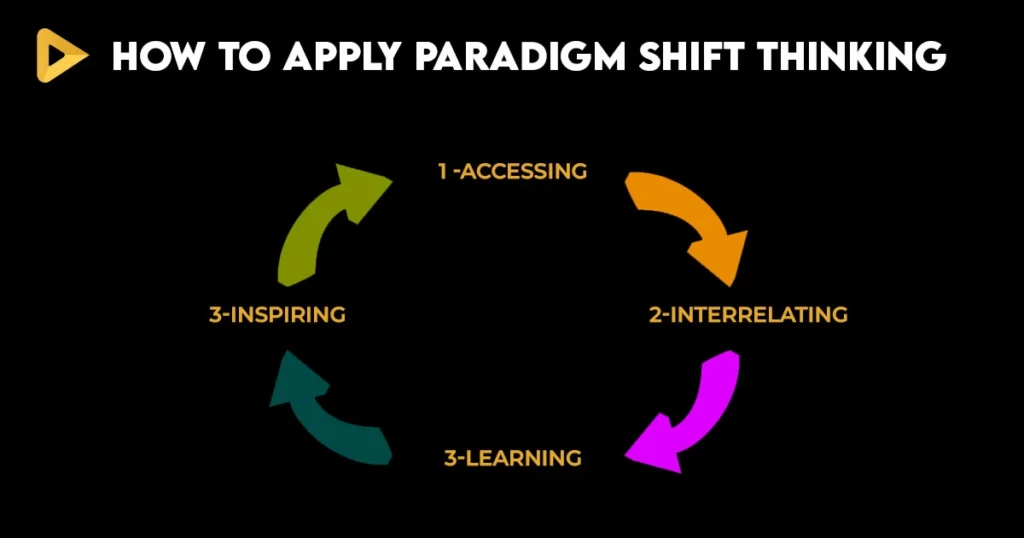
To apply paradigm shift thinking in your business or personal life. Follow these steps:
- Identify outdated paradigms: Recognize which assumptions, practices, or models are no longer serving you.
- Challenge conventional wisdom: Look for ways to innovate or adapt your approach to better meet current and future demands.
- Implement change: Develop new strategies, embrace technological shifts, and adopt more flexible business models.
- Measure success: Set clear metrics to track the impact of these changes and continuously adjust your approach.
By embracing a paradigm shift, you enable continuous improvement, innovation, and adaptability.
FAQs
What is Paradigm Shift Thinking and why is it important?
Paradigm shift thinking is a complete change in how you approach problems and opportunities. It challenges old assumptions and helps you embrace new ways of thinking, leading to better decision-making and growth, whether in business or personal life.
How do I adapt to market changes using paradigm shift thinking?
To adapt, start by identifying outdated methods or beliefs holding you back. Then, seek innovative solutions, embrace flexibility, and stay ahead of trends by viewing challenges as opportunities for reinvention and growth.
How can I implement paradigm shift thinking to future-proof my business?
Begin by questioning existing processes and assumptions in your business. Shift your strategies to be more agile, invest in new technologies, and stay open to change. Continuously evaluate your approach to stay relevant in an evolving market.